The LLM Revolution in Marketing: From Personalized Content to Hyper-Efficient Campaigns
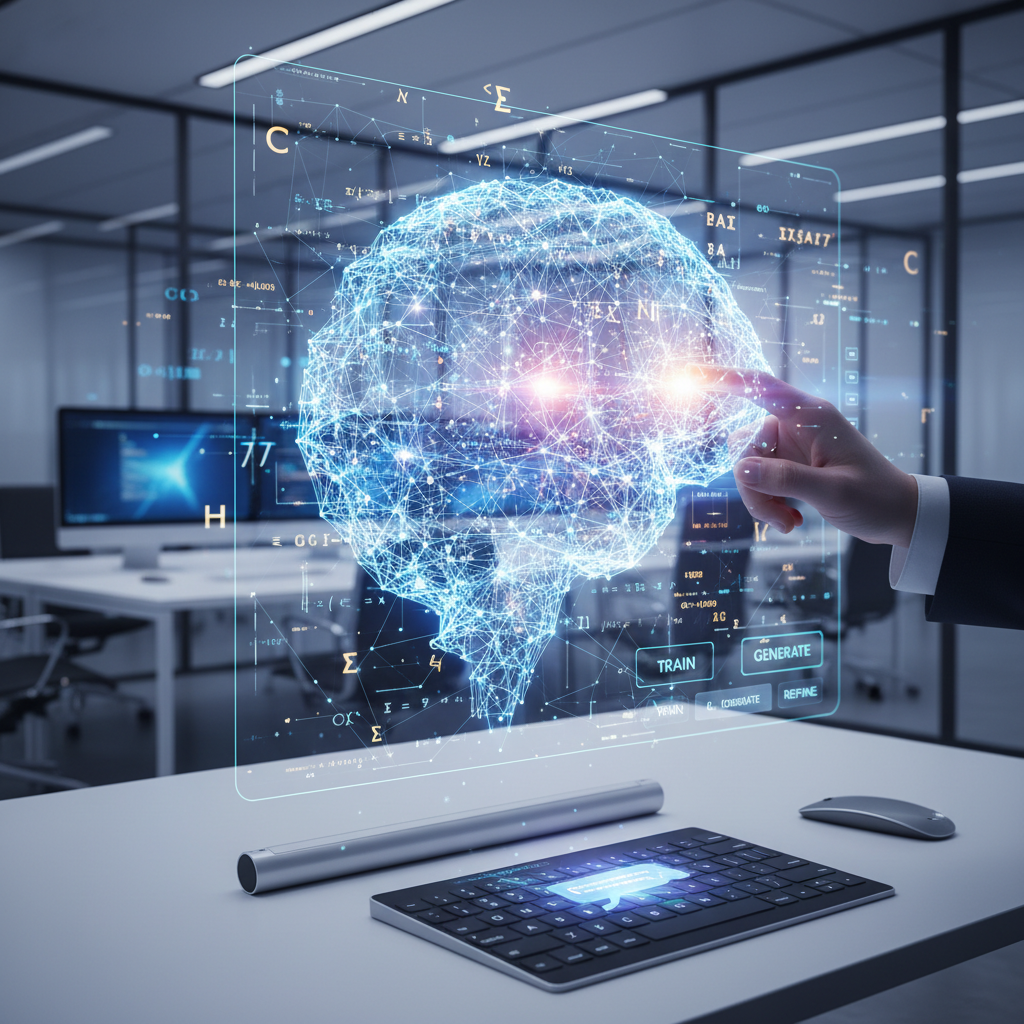
Image credit: AI Generated (Manus AI)
The LLM Revolution in Marketing: From Personalized Content to Hyper-Efficient Campaigns
The marketing world has always been defined by its ability to adapt to new technologies, but few innovations have promised a shift as profound as Large Language Models (LLMs). LLMs, the technology underpinning tools like ChatGPT and Google's Gemini, are not just sophisticated chatbots; they are powerful engines capable of understanding, generating, and synthesizing human language at scale. For marketers, this represents a paradigm shift, moving the focus from broad segmentation to genuine, hyper-personalized engagement.
Beyond Automation: The Power of Contextual Understanding
Historically, marketing automation tools excelled at repetitive tasks—scheduling emails, posting social media updates, and basic lead scoring. LLMs, however, operate on a higher cognitive level. They introduce contextual understanding, allowing systems to interpret nuances in customer feedback, tailor content based on real-time sentiment analysis, and even adjust brand voice across different channels seamlessly.
Consider the task of content generation. While older AI tools could spin basic articles from templates, an LLM can generate a comprehensive blog post, draft an accompanying social media campaign, and write five distinct email subject lines, all while maintaining a consistent brand tone and optimizing for specific SEO keywords. This speed and quality allow marketing teams to scale their content output exponentially without sacrificing relevance.
Key Applications of LLMs in Modern Marketing
1. Hyper-Personalization at Scale
The dream of one-to-one marketing is finally achievable. LLMs can ingest massive amounts of customer data—purchase history, browsing behavior, support tickets, and demographic information—to create highly detailed customer profiles. They then use these profiles to generate unique messaging for individual users. For an e-commerce brand, this might mean generating a product description specifically highlighting features relevant to that user's past interests, delivered via a push notification at the optimal time.
2. Advanced Customer Service and Support
While not strictly a marketing function, customer service heavily influences brand perception and loyalty. LLM-powered chatbots can handle complex queries that previously required human intervention. They can access vast knowledge bases, summarize long support threads, and provide empathetic, context-aware responses. Furthermore, LLMs can analyze support transcripts to identify common pain points, providing invaluable feedback for marketing and product development teams.
3. Dynamic Campaign Optimization
LLMs excel at processing and analyzing unstructured data, making them perfect for dynamic campaign management. They can monitor thousands of ad variations across platforms (Google Ads, Facebook, LinkedIn), analyze performance metrics, and instantly suggest or implement changes to bidding strategies, ad copy, and targeting parameters. This real-time optimization leads to significant improvements in Return on Ad Spend (ROAS).
4. Enhanced Market Research and Trend Forecasting
Analyzing social media chatter, news articles, and competitor reports used to be a time-consuming manual task. LLMs can process millions of data points overnight, identifying emerging trends, shifts in consumer sentiment, and competitive gaps. A company can use an LLM to quickly understand why a competitor's new product launch is gaining traction, allowing them to adjust their messaging or product roadmap almost immediately.
Challenges and Ethical Considerations
Despite the immense potential, the integration of LLMs is not without challenges. Data privacy remains paramount; marketers must ensure that the data fed into LLMs is anonymized and compliant with regulations like GDPR and CCPA. Furthermore, the issue of 'hallucination'—where LLMs generate false or misleading information—requires careful human oversight, especially when creating factual content or legal disclaimers.
Ethical bias is another critical concern. If the training data reflects societal biases, the LLM may perpetuate those biases in its output, potentially leading to discriminatory targeting or messaging. Marketers must actively audit their LLM outputs to ensure fairness and inclusivity.
The Future of the Marketing Professional
The rise of LLMs does not signal the end of the marketing professional; rather, it elevates their role. By automating repetitive content creation and data analysis, LLMs free up human marketers to focus on higher-level strategic thinking, creativity, and emotional storytelling—areas where human intuition remains irreplaceable. The successful marketer of tomorrow will be the one who views the LLM not as a replacement, but as a powerful co-pilot.
Integrating LLMs effectively requires investment in infrastructure, training, and a clear strategic roadmap. Companies that embrace this technology early will be best positioned to deliver truly personalized experiences, drive efficiency, and establish a dominant market presence in the years to come.
AI Pulse Editorial
Editorial team specialized in artificial intelligence and technology. AI Pulse is a publication dedicated to covering the latest news, trends, and analysis from the world of AI.



Comments (0)
Log in to comment
Log in to commentNo comments yet. Be the first to share your thoughts!