Agentic AI: The New Frontier for Scaling Digital Marketing
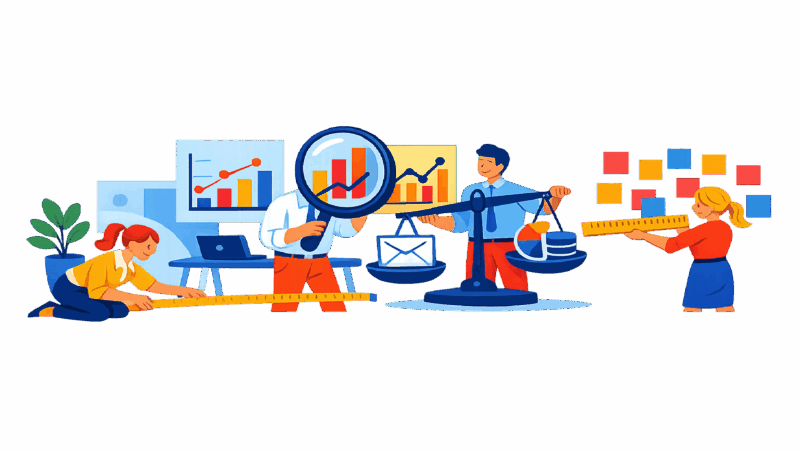
Image credit: Imagem: MarTech
The Evolution of Automation in Marketing
Digital marketing has long been a fertile ground for technological innovation, with automation playing a crucial role in optimizing campaigns and personalizing customer experiences. From CRM tools to email marketing platforms, the pursuit of efficiency and impact has been constant. However, the next wave of transformation is emerging with agentic artificial intelligence, which goes beyond simply automating repetitive tasks.
Traditionally, AI in marketing acted as a support tool, processing data or generating drafts. Now, agentic AI is positioning itself as an autonomous collaborator, capable of setting goals, planning actions, and executing complex tasks with minimal supervision, marking a significant shift in how marketing teams operate.
Agentic AI: What It Is and How It Works
Agentic artificial intelligence refers to AI systems designed to operate with a degree of autonomy, intelligence, and proactivity. Unlike reactive AI models that merely respond to specific commands, AI agents can perceive their environment, make decisions, plan sequences of actions, and execute those actions to achieve a predefined objective. Think of them as "software robots" with reasoning and execution capabilities.
In the marketing context, an AI agent could, for example, analyze campaign performance, identify bottlenecks, propose adjustments to targeting or content, and even implement these changes in real-time. This requires a more sophisticated AI architecture, often involving multiple large language models (LLMs) and other AI components working together to simulate a more human-like thought and action process. Companies like Google DeepMind have been actively exploring the potential of such architectures.
Scaling Marketing Performance with Autonomy
The application of agentic AI in marketing promises a qualitative leap in performance. Instead of a human analyst spending hours compiling reports and identifying trends, an AI agent can continuously monitor metrics, predict consumer behavior, and dynamically optimize ad bids or content strategies. This frees marketing teams to focus on high-level strategies and innovation, rather than operational tasks.
Imagine an AI agent that, upon noticing a drop in an ad's conversion rate, not only alerts the team but also automatically suggests and tests new copy or image variations, based on historical data and market trends. This ability to "think" and "act" autonomously can drastically accelerate the optimization cycle and maximize ROI. OpenAI has been a leader in developing models that enable such capabilities, like GPT-4, which can be the foundation for more complex agents.
Beyond campaign optimization, agentic AI can revolutionize personalization at scale. By understanding individual user preferences and real-time behavior, these agents can create hyper-personalized customer journeys, from product recommendations to post-purchase communication. This not only enhances the customer experience but also drives engagement and conversion rates. For more insights on how AI is reshaping the industry, check out our articles on enterprise AI [blocked].
Challenges and Ethical Considerations
While the potential of agentic AI is immense, its implementation is not without challenges. The complexity of designing and managing autonomous systems requires a high level of expertise. Issues of transparency, explainability, and control are crucial, as decisions made by these agents can have significant impacts. It is essential to ensure that AI agents operate within ethical and regulatory boundaries, avoiding biases and protecting data privacy.
Human oversight remains indispensable. Agentic AI should be viewed as a powerful tool that augments human capabilities, not as a complete replacement. Collaboration between humans and AI will be key to unlocking its full potential, ensuring that technology serves the company's strategic objectives responsibly. To explore different AI tools and their applications, visit our AI tools comparison [blocked].
Why It Matters
The rise of agentic AI in marketing represents a paradigm shift, transforming automation from a reactive tool into a proactive partner. This not only optimizes campaign efficiency and performance but also unleashes the creative and strategic potential of marketing teams, allowing them to focus on innovation and building deeper customer relationships. It's a crucial step towards a future where AI not only executes but also thinks and acts in pursuit of business objectives.
This article was inspired by content originally published on MarTech by Nick Yang. AI Pulse rewrites and expands AI news with additional analysis and context.
AI Pulse Editorial
Editorial team specialized in artificial intelligence and technology. AI Pulse is a publication dedicated to covering the latest news, trends, and analysis from the world of AI.



Comments (0)
Log in to comment
Log in to commentNo comments yet. Be the first to share your thoughts!