AI and Human Creativity: An Evolving Symphony
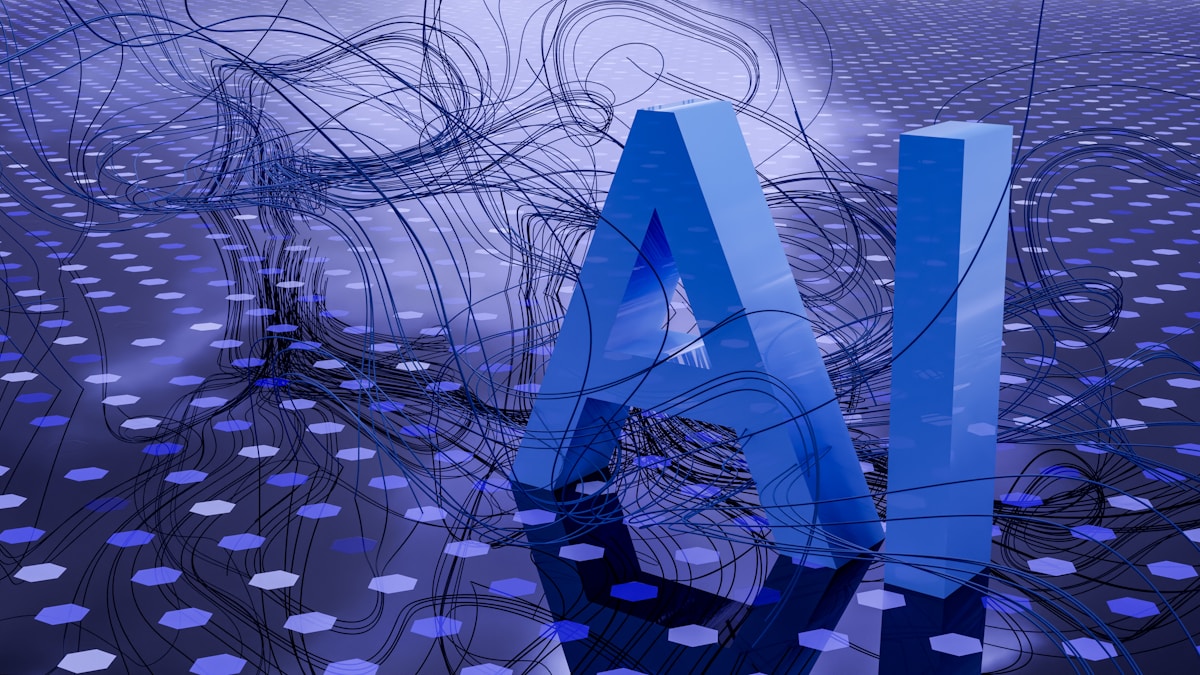
Image credit: Image: Unsplash
AI and Human Creativity: An Evolving Symphony
From the earliest text and image generation algorithms, Artificial Intelligence has been a disruptive force in the realm of creativity. In January 2026, we are no longer debating whether AI can be creative, but rather how it is enhancing, challenging, and redefining the very essence of human creativity. The symbiosis between human minds and advanced machines is giving rise to a new era of innovation.
Collaborative Tools and Augmented Generation
The most striking trend is the proliferation of AI tools acting as co-creators. Platforms like Midjourney v7 or DALL-E 4, now more sophisticated, not only generate images from prompts but also offer granular control over style, composition, and emotion, allowing visual artists to explore directions previously unfeasible. In music, software such as Amper Music or Google Magenta is being used by composers to generate complex melodies, harmonies, and arrangements, accelerating the process of musical prototyping and experimentation. AI doesn't replace the musician; it expands their arsenal.
Ethical Challenges and the Question of Authorship
With the advancement of generative AI, the line between human and machine-assisted creation has become increasingly blurred. Questions of authorship, copyright, and originality are at the heart of the debate. Who is the author of a work generated by AI from a human prompt? Regulation is still in its early stages, but we are already seeing movements from artists and creators demanding transparency and fair compensation for the use of their work in training AI models. Companies like Adobe, with its AI tools focused on ethical and licensed content, are attempting to lead the way with solutions that respect intellectual property.
The Future of Creative Work: Focus on Curation and Direction
Instead of fearing replacement, many creative professionals are adapting and evolving. The role of the human creator is shifting towards that of a director, curator, and strategist. The ability to formulate effective prompts, select the best AI outputs, and integrate these elements into a coherent and original vision becomes a crucial skill. Designers, writers, and artists who master the orchestration of AI to amplify their own vision are the ones who thrive. AI frees up time for conceptual thinking and high-level idea exploration, while the machine handles repetitive execution.
Conclusion: An Inevitable Partnership
AI is not the end of human creativity but rather a powerful catalyst for its evolution. We are witnessing the birth of new forms of art and expression, driven by the collaboration between human intuition and the computational capacity of machines. The ethical and legal challenges are real and demand continuous attention, but the promise of an era where creativity is more accessible, diverse, and boundless is undeniable. The symphony between AI and human creativity is just beginning, and the future promises even more complex and beautiful harmonies.
AI Pulse Editorial
Editorial team specialized in artificial intelligence and technology. AI Pulse is a publication dedicated to covering the latest news, trends, and analysis from the world of AI.
Comments (0)
Log in to comment
Log in to commentNo comments yet. Be the first to share your thoughts!