RL: Latest Trends and Breakthroughs in Reinforcement Learning

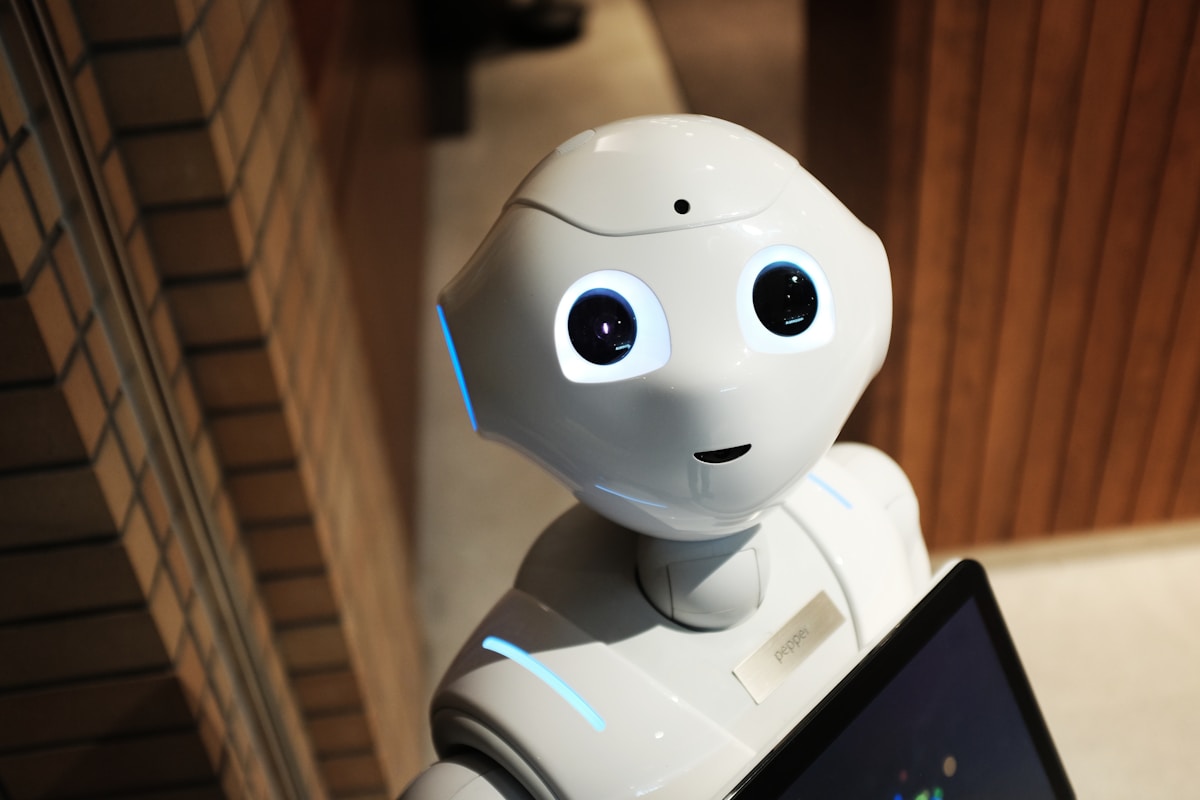
Image credit: Image: Unsplash
RL: Latest Trends and Breakthroughs in Reinforcement Learning
Reinforcement Learning (RL) has solidified its position as a cornerstone of artificial intelligence, driving the ability of autonomous agents to learn optimal action sequences in complex environments. In recent years, the discipline has witnessed a proliferation of innovations, transcending classic gaming domains to impact areas such as robotics, healthcare, and finance. This article explores the latest trends and crucial advancements defining the RL landscape in 2026.
Offline and Model-Based Reinforcement Learning
One of the most prominent trends is the rise of Offline Reinforcement Learning and Model-Based Reinforcement Learning. Offline RL addresses the limitation of scarce or expensive data by enabling agents to learn optimal policies from pre-existing datasets without direct environmental interaction. This is crucial for high-stakes applications like medicine or autonomous vehicles, where active exploration is infeasible. Algorithms such as Conservative Q-Learning (CQL) and Behavior Cloning from Scratch (BCS) are notable examples. Concurrently, Model-Based RL, which constructs an environment model to simulate outcomes, has seen advancements in efficiency and generalization, allowing agents to plan and explore more effectively, as evidenced by systems like DeepMind's MuZero.
Multi-Task RL and Generalization
The ability of an RL agent to generalize knowledge across different tasks or environments has been a focus of intense research. Multi-Task RL and Hierarchical RL aim to create agents that can solve a wider range of problems with a single set of policies or by decomposing complex tasks into simpler sub-tasks. This is vital for building more robust and adaptable AI, capable of operating in real-world scenarios that are rarely static. The use of transformer architectures in RL, inspired by the success of LLMs, is also enabling the learning of richer, more generalizable representations.
RL and the Future of Robotics and Industrial Control
Beyond laboratories, RL is finding increasingly practical applications in robotics and industrial control. From dexterous manipulation of complex objects (as demonstrated by systems from Boston Dynamics or Google Robotics) to optimizing manufacturing processes and supply chains, RL offers a path to intelligent automation. The integration of digital twins with RL allows for the simulation and optimization of physical systems in virtual environments, reducing costs and risks. The ability of RL agents to adapt to failures or unexpected changes in the environment is a key differentiator for operational resilience.
Conclusion and Future Outlook
Recent developments in RL underscore a transition from problem-specific solutions to more generalizable and data-efficient approaches. The convergence with other AI fields, such as imitation learning and generative neural networks, promises to unlock even greater capabilities. For researchers and engineers, the focus now lies on robustness, interpretability, and the ability to transfer learned knowledge to novel domains, paving the way for a new generation of truly autonomous and adaptable AI systems.
AI Pulse Editorial
Editorial team specialized in artificial intelligence and technology. AI Pulse is a publication dedicated to covering the latest news, trends, and analysis from the world of AI.


Comments (0)
Log in to comment
Log in to commentNo comments yet. Be the first to share your thoughts!