Supply Chains 4.0: The Future of Optimization with AI
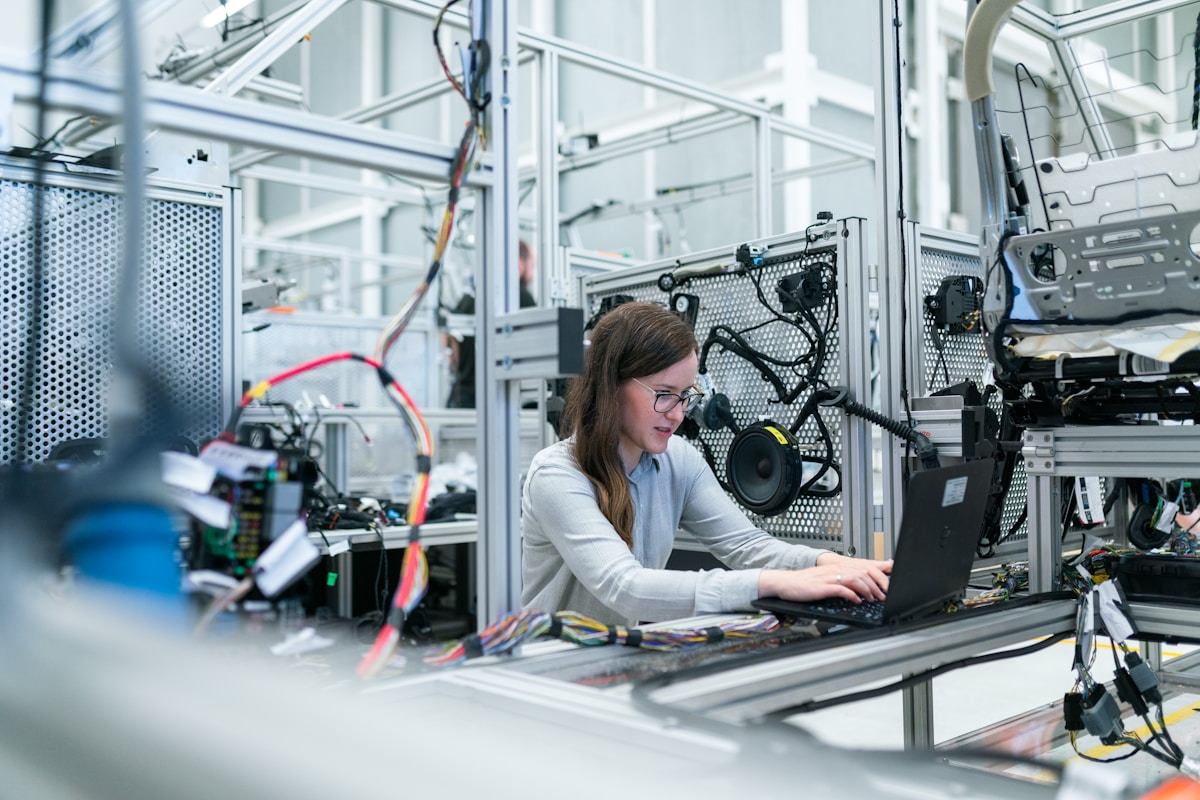
Image credit: Image: Unsplash
Supply Chains 4.0: The Future of Optimization with AI
The global supply chain, a complex and interconnected system, has historically been vulnerable to disruptions. However, artificial intelligence (AI) is emerging as the transformative force that promises not only to mitigate risks but also to drive unprecedented levels of efficiency and resilience. In 2026, we are merely at the threshold of a revolution, with predictions pointing to massive and sophisticated AI adoption in the coming years.
Predictive Forecasting and Hyper-Localized Demand
AI already enhances demand forecasting, but the future promises even greater granularity. Advanced machine learning and deep learning models will analyze not only historical sales data but also real-time external factors such as weather, social events, news, and social media market sentiment. This will enable hyper-localized and dynamic forecasts, reducing both overstocking and stockouts. Companies like Amazon already use sophisticated algorithms for demand prediction, but the next generation of AI will integrate multimodal and contextual data for near-perfect accuracy.
Robotic Automation and Warehouse Optimization
Warehouses and distribution centers will increasingly be orchestrated by AI. Autonomous Mobile Robots (AMRs) for material handling and drones for inventory are already a reality, but AI will coordinate them more intelligently, optimizing routes, task allocation, and even the predictive maintenance of the robots themselves. NVIDIA, with its Isaac platform, is enabling the development of smarter robots that can learn and adapt in complex environments, transforming internal logistics into a ballet of robotic efficiency.
End-to-End Resilience and Visibility
AI's ability to process and correlate vast volumes of data in real-time will be crucial for supply chain resilience. AI-powered platforms will monitor suppliers, transportation routes, and geopolitical conditions, proactively identifying bottlenecks and risks. Instead of reacting to disruptions, companies will be able to predict and mitigate issues before they occur, suggesting alternative routes or secondary suppliers. IBM, with its AI solutions for supply chain, already explores this predictive visibility, but the future will bring even more robust real-time simulation and optimization capabilities.
Conclusion: The Era of the Autonomous Supply Chain
The next decade will see the transition to increasingly autonomous supply chains, where AI not only assists but makes optimized decisions in real-time, from raw material procurement to final delivery. Companies that invest in robust data infrastructure and AI talent will be the leaders, transforming complexity into a sustainable competitive advantage. AI is not just a tool; it is the architect of the next generation of intelligent and adaptable supply chains.
AI Pulse Editorial
Editorial team specialized in artificial intelligence and technology. AI Pulse is a publication dedicated to covering the latest news, trends, and analysis from the world of AI.

Comments (0)
Log in to comment
Log in to commentNo comments yet. Be the first to share your thoughts!