Multimodal AI: Unifying Perception and Cognition for the Future

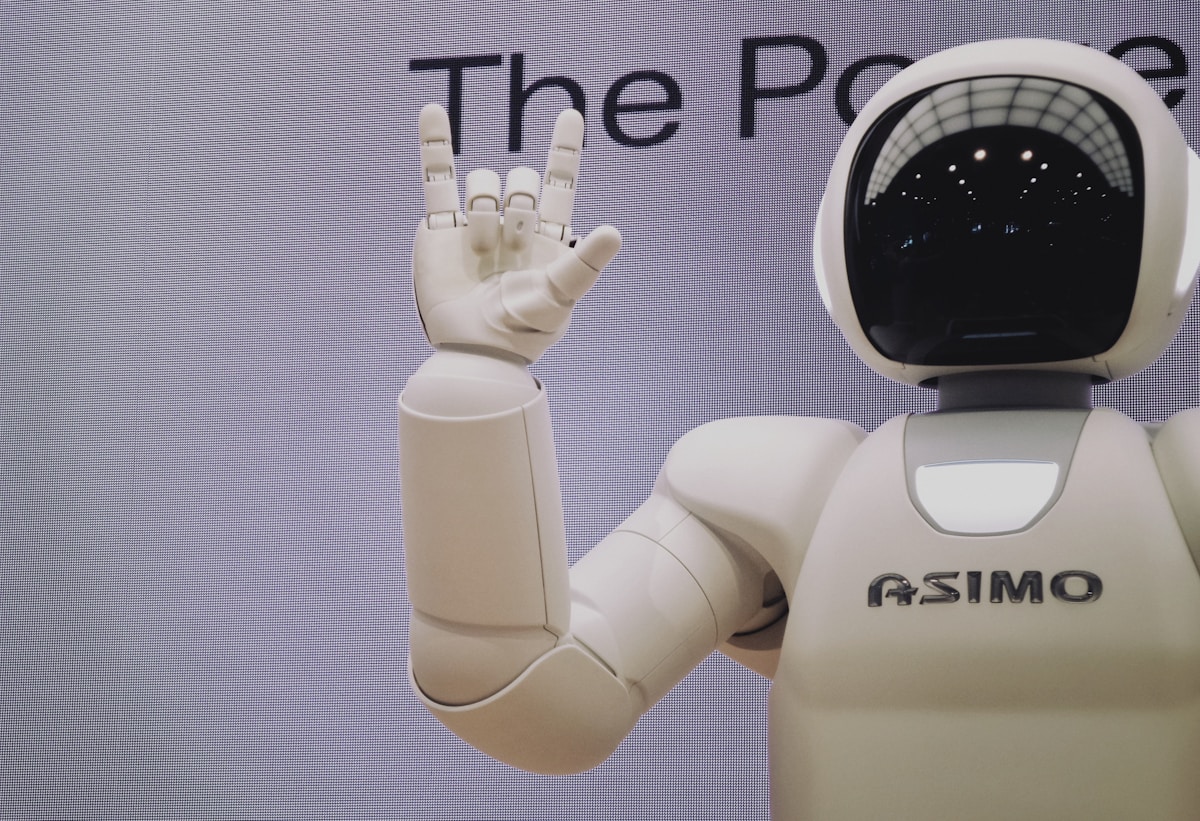
Image credit: Image: Unsplash
Multimodal AI: Unifying Perception and Cognition for the Future
The pursuit of artificial intelligence systems that emulate human cognition has led to significant breakthroughs. Among these, research into multimodal AI stands out as a highly promising field, aiming to create models capable of processing and integrating information from multiple sensory modalities—text, image, audio, video, and even sensory data like touch or smell. As of May 2026, this area is not merely a theoretical frontier but a rapidly evolving reality, driving the next generation of intelligent applications.
Foundations and Challenges of Multimodal Integration
The core of multimodal AI lies in a model's ability to learn joint representations (embeddings) that capture the interrelationships between different types of data. Historically, AI models specialized in a single modality, such as natural language processing (NLP) or computer vision (CV). Multimodality seeks to break down these silos, enabling a system to grasp the full context of a scene by analyzing both the image and its associated textual description, for instance.
Key challenges include:
- Alignment and Fusion: How to meaningfully map and combine heterogeneous information.
- Joint Representation: Developing semantically rich and modality-agnostic embeddings.
- Knowledge Transfer: Leveraging knowledge learned in one modality to aid understanding in another.
- Robustness: Ensuring models perform well even with incomplete or noisy data from certain modalities.
Current Architectures and Approaches
Transformer architectures, such as the Vision Transformer (ViT) and large language models (LLMs), have been instrumental in advancing multimodal AI. Models like OpenAI's GPT-4o and Google DeepMind's Gemini are prominent examples, demonstrating impressive reasoning capabilities across text, image, and audio. These models frequently employ strategies such as:
- Cross-modal Encoders: Where different modalities are encoded separately and then combined in an attention or fusion layer.
- Unified Models: Which utilize a single transformer architecture to process all modalities, often converting them into a common tokenization format (e.g., visual tokens, audio tokens).
- Contrastive Learning: As seen in OpenAI's CLIP, which learns multimodal representations by aligning text-image pairs, enabling zero-shot classification and text-to-image generation.
Applications and Practical Implications
The applications of multimodal AI are vast and transformative:
- Human-Machine Interaction: More intelligent virtual assistants that understand voice commands, gestures, and visual context. For example, an assistant that can see what you're pointing at and respond verbally.
- Healthcare: Enhanced medical diagnostics by combining medical images (X-rays, MRIs), patient history (text), and sensor data (heart rate).
- Education: Adaptive learning platforms that analyze student engagement through facial expressions (video), text responses, and speech patterns.
- Robotics: Robots capable of navigating and interacting with environments more effectively, combining vision, touch, and hearing to perform complex tasks.
- Content Generation: Creating videos from text and audio, or enhancing images based on detailed textual descriptions.
Companies like Meta AI are also heavily investing in multimodal models for augmented and virtual reality, aiming to create more immersive and intuitive experiences.
Conclusion and Future Outlook
Multimodal AI research stands at the cusp of a new era, promising more robust, adaptable systems capable of deep contextual understanding. As models become more proficient at fusing and reasoning over data from diverse modalities, we can expect a proliferation of applications that will redefine how we interact with technology and the world around us. The coming years will see a continued focus on improving computational efficiency, enhancing the interpretability of multimodal models, and ensuring these advancements are developed ethically and responsibly.
AI Pulse Editorial
Editorial team specialized in artificial intelligence and technology. AI Pulse is a publication dedicated to covering the latest news, trends, and analysis from the world of AI.


Comments (0)
Log in to comment
Log in to commentNo comments yet. Be the first to share your thoughts!