Quantum Computing & AI: Challenges and Solutions at the Forefront

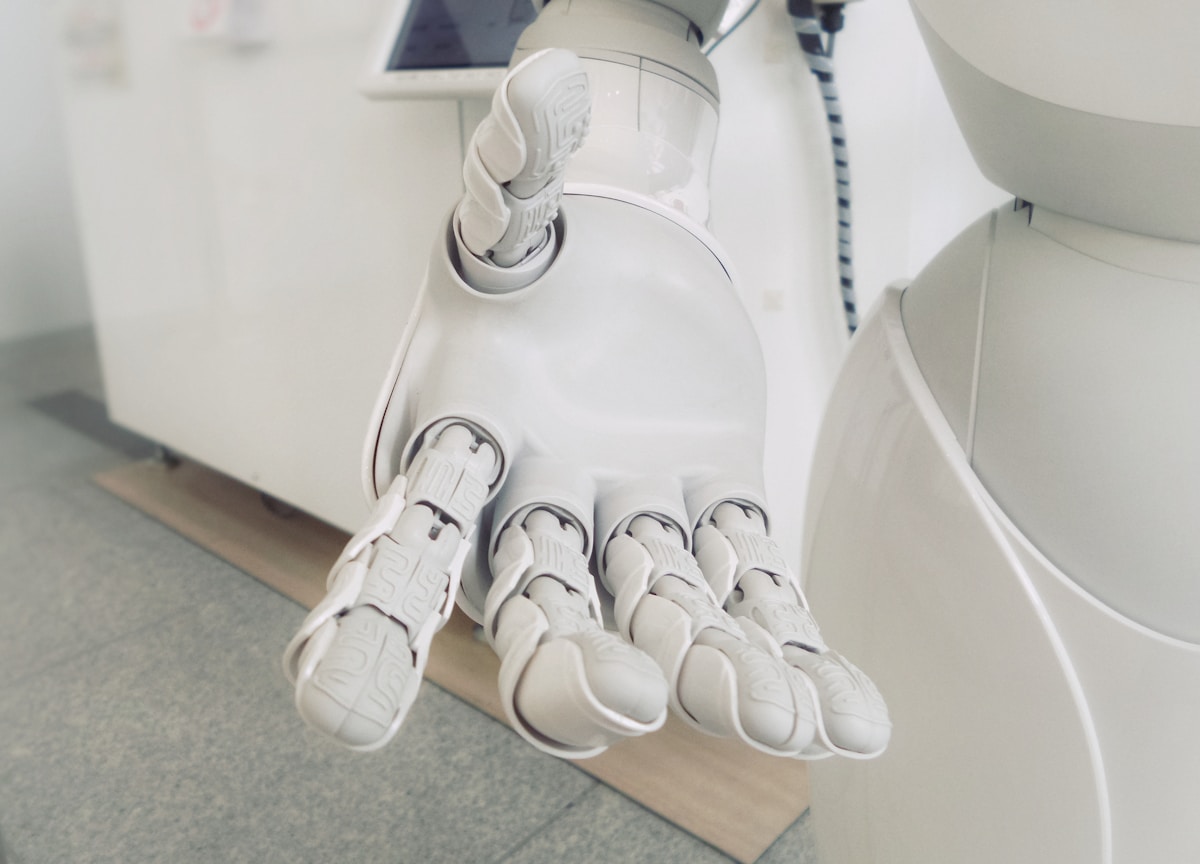
Image credit: Image: Unsplash
Quantum Computing & AI: Challenges and Solutions at the Forefront of Innovation
The intersection of quantum computing (QC) and artificial intelligence (AI) represents one of the most promising yet complex frontiers in science and technology. As of March 2026, while AI continues to dominate headlines with advancements in language models and computer vision, QC emerges as a potential catalyst to overcome classical computational limitations, offering new perspectives for intractable problems. However, realizing this potential is fraught with substantial challenges that demand dedicated research and development.
Fundamental Challenges in QC-AI Integration
1. Quantum Hardware and Scalability
The primary bottleneck lies in the immaturity of quantum hardware. Current devices (NISQ - Noisy Intermediate-Scale Quantum) are susceptible to errors and possess a limited number of coherent qubits. Building fault-tolerant quantum computers, essential for complex AI algorithms, remains a long-term goal. Companies like IBM and Google are making progress, but scalability and stability are still critical hurdles.
2. Quantum Algorithms for AI
While algorithms such as HHL for linear systems and QAML (Quantum-Assisted Machine Learning) for optimization exist, adapting classical AI techniques to the quantum paradigm is challenging. Many quantum algorithms require access to superposed and entangled quantum states, which are non-trivial to prepare or measure at scale. The search for a demonstrable quantum advantage in practical AI tasks is ongoing.
3. Access and Programming
The complexity of quantum programming and the scarcity of developers with expertise in both QC and AI are significant barriers. Tools like Qiskit (IBM) and Cirq (Google) are democratizing access, but low-level abstraction and debugging quantum circuits remain difficult.
Solutions and Way Forward
1. Hybrid Quantum-Classical Approaches
The most promising strategy in the short to medium term involves hybrid models. In these, quantum computing acts as an accelerator for specific parts of AI algorithms, while the bulk of the processing is handled by classical computers. Examples include using variational quantum optimizers (VQE, QAOA) to train neural networks or solve optimization problems in machine learning.
2. Software and Tool Development
Continued investment in frameworks and libraries that simplify quantum programming and integration with classical AI platforms is crucial. The creation of high-level languages and integrated development environments (IDEs) that abstract away quantum hardware complexity will accelerate innovation. Collaboration between academia and industry is vital to standardize interfaces and promote interoperability.
3. Research in Applied Quantum Algorithms
Research should focus on identifying AI problems where QC can offer a demonstrable advantage, rather than attempting to “quantize” all classical algorithms. Areas such as combinatorial optimization, molecular simulation for drug discovery (relevant for AI in biotechnology), and certain types of unsupervised learning are fertile grounds for exploration.
Conclusion
The synergy between quantum computing and AI has the potential to redefine the technological landscape. While the challenges are formidable, emerging solutions – from hybrid architectures to enhanced development tools – are paving the way. Progress will depend on a collaborative global effort to overcome hardware limitations, refine algorithms, and empower a new generation of scientists and engineers. The era of quantum AI is just beginning, and its impact will be transformative.
AI Pulse Editorial
Editorial team specialized in artificial intelligence and technology. AI Pulse is a publication dedicated to covering the latest news, trends, and analysis from the world of AI.


Comments (0)
Log in to comment
Log in to commentNo comments yet. Be the first to share your thoughts!