Slackbot Transforms into AI Agent to Streamline Enterprise Workflows
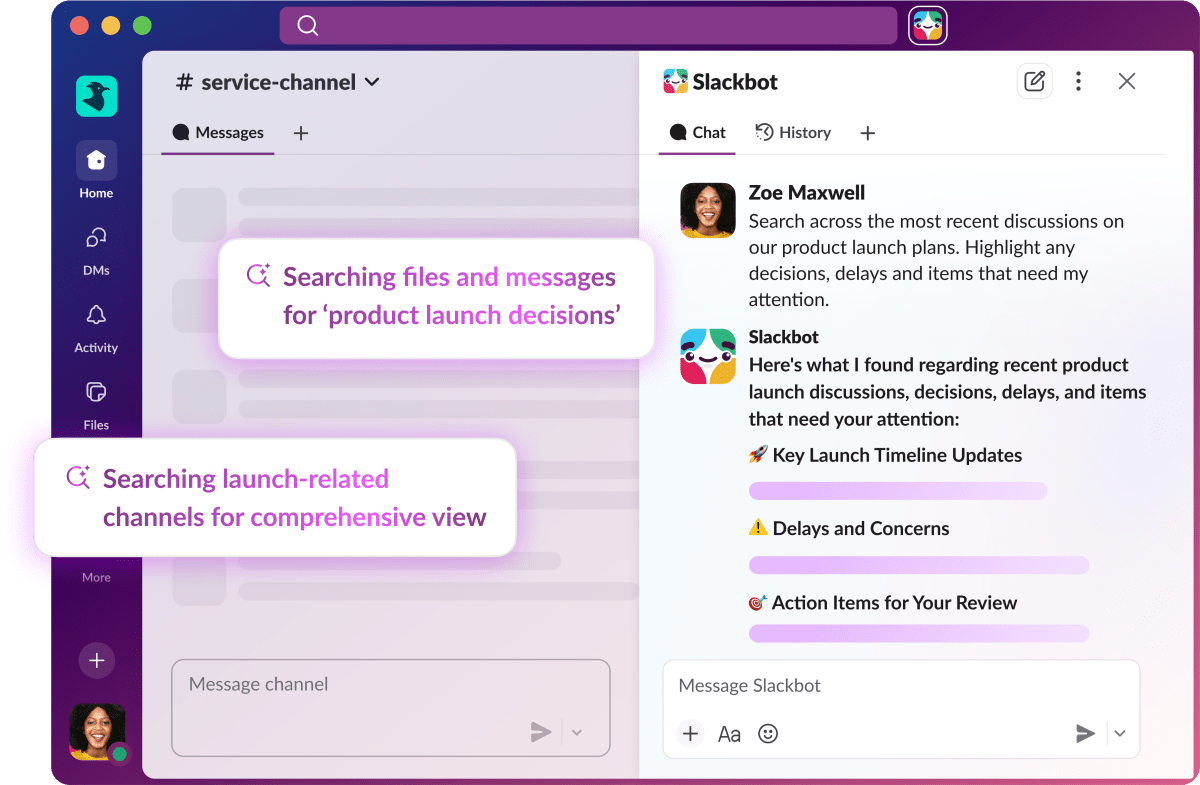
Image credit: Imagem: TechCrunch AI
Slackbot's Evolution: From Simple Assistant to AI Agent
Slackbot, long a familiar assistant for Slack users, is undergoing a radical transformation. Salesforce, the owner of the corporate communication platform, has announced that Slackbot has evolved from a basic chatbot into a multifunctional artificial intelligence agent. This upgrade aims to redefine how teams interact with their work tools, enabling the execution of complex, automated tasks directly within the Slack environment.
Traditionally, Slackbot was known for answering simple questions and providing reminders. Now, it is being positioned as a workflow orchestrator, capable of integrating with and interacting across a variety of enterprise applications, such as CRMs, HR systems, and project management platforms. This new capability reflects a growing trend in the tech industry, where AI is being leveraged to create more cohesive and efficient user experiences.
How the New Slackbot AI Agent Functions
The core of the new Slackbot's functionality lies in its ability to act as an autonomous "agent." This means that instead of merely responding to commands, it can initiate and complete actions on behalf of the user across different platforms. For instance, an employee will be able to ask Slackbot to create a new customer record in Salesforce, schedule a meeting in the corporate calendar, or generate a sales report, all without leaving the Slack interface.
This deep integration is powered by advanced language models and an architecture that allows Slackbot to understand the context of requests and translate them into executable actions within connected applications. Salesforce is heavily investing in generative AI to enhance its products, and Slackbot is a prominent example of this strategy. The company has emphasized the importance of trustworthy and secure AI for the corporate environment, ensuring that agent interactions are accurate and safe.
Implications for Productivity and the Future of Work
The introduction of Slackbot as an AI agent has significant implications for enterprise productivity. By centralizing task execution and reducing the need to switch between multiple applications, teams can save valuable time and minimize interruptions. This can lead to an increase in operational efficiency and allow employees to focus on higher-value, strategic activities.
Furthermore, this innovation signals a future where conversational interfaces become the primary entry point for business process automation. Companies adopting these technologies can gain a competitive edge by optimizing their workflows and improving employee experience. To explore other tools transforming the workplace, you can compare AI tools [blocked] available in the market.
Challenges and Ethical Considerations
While the benefits are clear, implementing AI agents in corporate environments also presents challenges. Issues of data security, privacy, and the need for robust AI governance are crucial. Salesforce will need to ensure that Slackbot operates with transparency and that sensitive data is adequately protected. The complexity of integrating and managing multiple systems will also require careful consideration from organizations.
Slackbot's success as an agent will depend on its ability to understand nuances, handle exceptions, and continuously learn from user interactions. Research into autonomous AI agents, such as that published in scientific journals, highlights the complexity of creating systems that can operate reliably in dynamic environments.
Why It Matters
Slackbot's transformation into an AI agent represents a milestone in the convergence of communication and enterprise automation. It not only simplifies daily operations but also sets a new standard for human-software interaction, promising a future where artificial intelligence is an intrinsic and proactive part of the workflow, freeing human potential for more strategic and creative tasks. This advancement is a crucial step in the evolution of enterprise AI [blocked].
This article was inspired by content originally published on TechCrunch AI by Rebecca Szkutak. AI Pulse rewrites and expands AI news with additional analysis and context.
AI Pulse Editorial
Editorial team specialized in artificial intelligence and technology. AI Pulse is a publication dedicated to covering the latest news, trends, and analysis from the world of AI.

Comments (0)
Log in to comment
Log in to commentNo comments yet. Be the first to share your thoughts!