AI and the Economy: Unpacking Artificial Intelligence's Transformative Impact
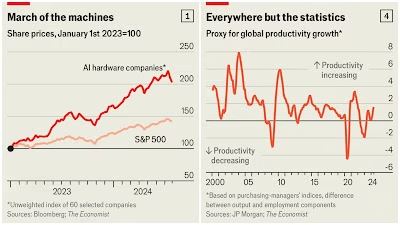
Image credit: Imagem: Shifter
Artificial intelligence (AI) has been hailed as the next major driving force of the global economy, with leading companies like OpenAI and Google projecting capabilities that surpass human intelligence. This promise raises crucial questions about the future of work, productivity, and wealth distribution, necessitating a deep dive into how this technology is redefining the economic landscape.
The Inevitable Rise of Artificial Intelligence
The exponential growth of AI is not accidental but rather the result of a confluence of factors. Access to vast amounts of data, increasing computational power through GPUs, and breakthroughs in deep learning algorithms have enabled models like ChatGPT to reach previously unimaginable levels of sophistication. This progress has been fueled by massive investments in research and development, with companies competing to lead the next technological frontier. The ability to process and learn from data at an unprecedented scale is at the core of this revolution, allowing AI to optimize processes, automate tasks, and generate valuable insights across nearly every sector.
Reshaping the Global Economic Landscape
Artificial intelligence is already having a tangible impact on the economy. In manufacturing, collaborative robots and AI systems optimize production lines, reducing waste and increasing efficiency. In the service sector, chatbots and virtual assistants enhance customer support, while advanced algorithms personalize consumer experiences and optimize supply chains. Sectors like finance, healthcare, and logistics are undergoing profound transformations, with AI automating repetitive tasks and enabling real-time, data-driven decision-making. A report by PwC, for instance, estimates that AI could contribute up to $15.7 trillion to the global economy by 2030, primarily through productivity gains and consumption PwC AI Impact Report.
Challenges and the Distribution of Gains and Costs
While AI's potential is immense, its implementation is not without challenges. AI-driven automation raises concerns about job displacement, requiring governments and businesses to invest in reskilling and education for an evolving workforce. The question of equity in distributing AI's benefits is equally critical. Currently, the largest gains appear concentrated among major tech companies and more developed nations that possess the necessary infrastructure and talent. There are also ethical concerns, such as algorithmic bias and data privacy, which need to be addressed to ensure responsible development. The need for regulation and international collaboration is increasingly evident to mitigate risks and maximize benefits for all. For more insights into how businesses are integrating AI, explore our guide on enterprise AI [blocked].
The Role of Innovation and Research
The pace of AI innovation continues to be astonishing. Institutions like MIT are constantly publishing new research that pushes the boundaries of what's possible, from generative AI to more energy-efficient AI systems MIT News on AI. This ecosystem of research and development is crucial for overcoming current limitations and unlocking novel applications that can further drive economic growth. Collaboration between academia, industry, and governments will be vital to ensure AI is a force for global good, fostering responsible and inclusive innovation.
Why It Matters
Artificial intelligence is not merely a technological tool; it is a catalyst for fundamental economic restructuring. Understanding its growth mechanisms, its implications for the job market, and how its benefits are distributed is crucial for shaping policies that ensure a prosperous and equitable future for everyone, rather than just a select few. The future of global productivity and innovation hinges on our ability to navigate this transformative transition intelligently and ethically.
This article was inspired by content originally published on Shifter by Vicente Ferreira. AI Pulse rewrites and expands AI news with additional analysis and context.
AI Pulse Editorial
Editorial team specialized in artificial intelligence and technology. AI Pulse is a publication dedicated to covering the latest news, trends, and analysis from the world of AI.


Comments (0)
Log in to comment
Log in to commentNo comments yet. Be the first to share your thoughts!