AI Reasoning and Logic: Recent Advances and Future Challenges

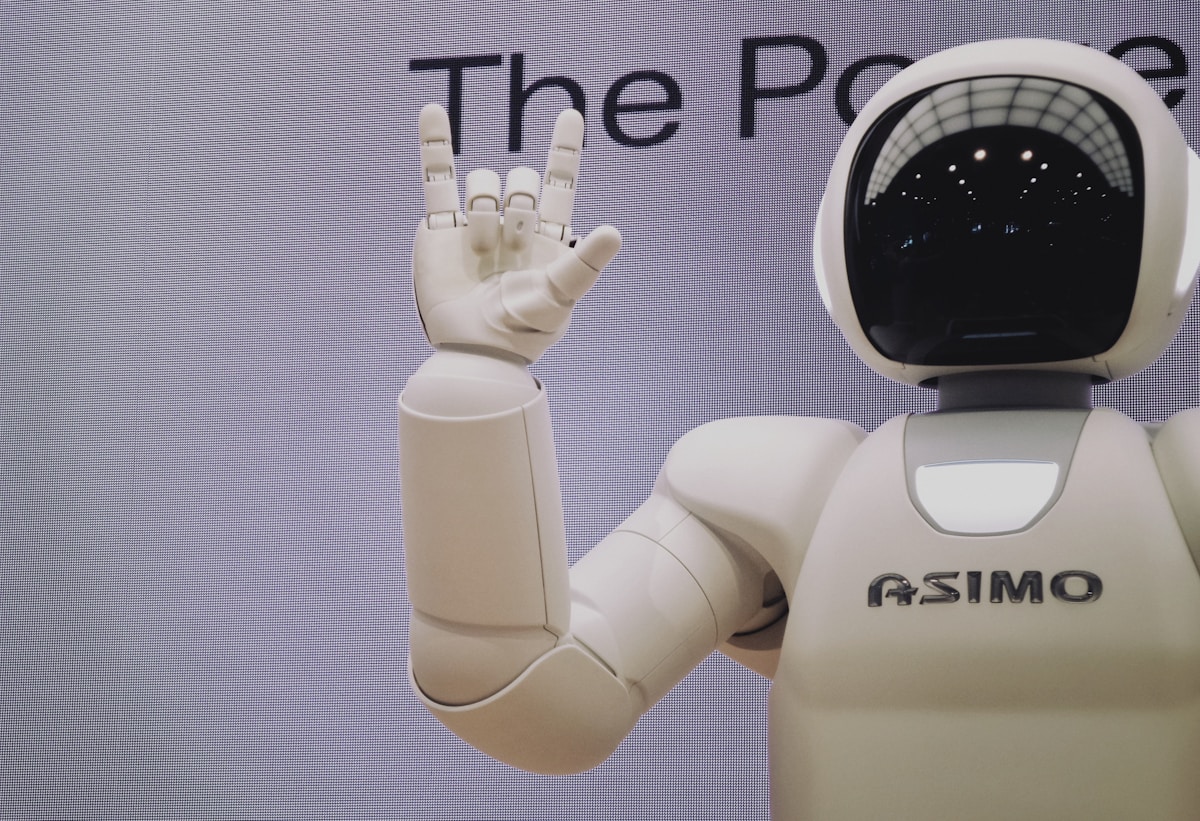
Image credit: Image: Unsplash
AI Reasoning and Logic: Recent Advances and Future Challenges
Since its inception, artificial intelligence has aspired to replicate and, eventually, surpass human cognitive capabilities, with reasoning and logic at its core. As of January 2026, we are witnessing an era of unprecedented transformations, where AI models are no longer confined to pattern recognition but demonstrate emergent abilities in inference, deduction, and complex planning. This evolution is crucial for the next generation of intelligent systems, which demand not only data processing but also the understanding and application of logical principles.
The Convergence of Symbolic and Neural Approaches
Historically, the field of AI has been divided between symbolic (rule-based, formal logic) and neural (machine learning, neural networks) approaches. The most prominent trend today is the convergence of these two philosophies. Large Language Models (LLMs) like OpenAI's GPT-4 and Google's Gemini, for instance, are being enhanced with symbolic reasoning modules or prompting techniques that guide them to decompose problems into logical steps. This enables them to not only generate coherent text but also solve complex mathematical problems, code, and even perform inferences about real-world scenarios, as demonstrated in benchmarks like MATH and GSM8K, where performance is consistently improving.
Multi-Modal Reasoning and its Impact on Robotics
Another significant advancement lies in multi-modal reasoning. The ability to integrate and reason about information from diverse sources—text, image, audio, and sensory data—is propelling AI into more robust applications. In robotics, this is revolutionary. Robots equipped with multi-modal LLMs can now interpret natural language commands, visually analyze their environment, and plan logical sequences of actions to execute complex tasks. Companies like Boston Dynamics and Figure AI are actively exploring the integration of LLMs to enhance the autonomy and decision-making capabilities of their robots, allowing them to adapt to unstructured environments and respond to unforeseen situations with an unprecedented degree of contextual reasoning.
Challenges and the Future of Logic in AI
Despite these advancements, challenges persist. The
AI Pulse Editorial
Editorial team specialized in artificial intelligence and technology. AI Pulse is a publication dedicated to covering the latest news, trends, and analysis from the world of AI.


Comments (0)
Log in to comment
Log in to commentNo comments yet. Be the first to share your thoughts!