Multimodal AI: Challenges and Solutions in the Next Research Frontier

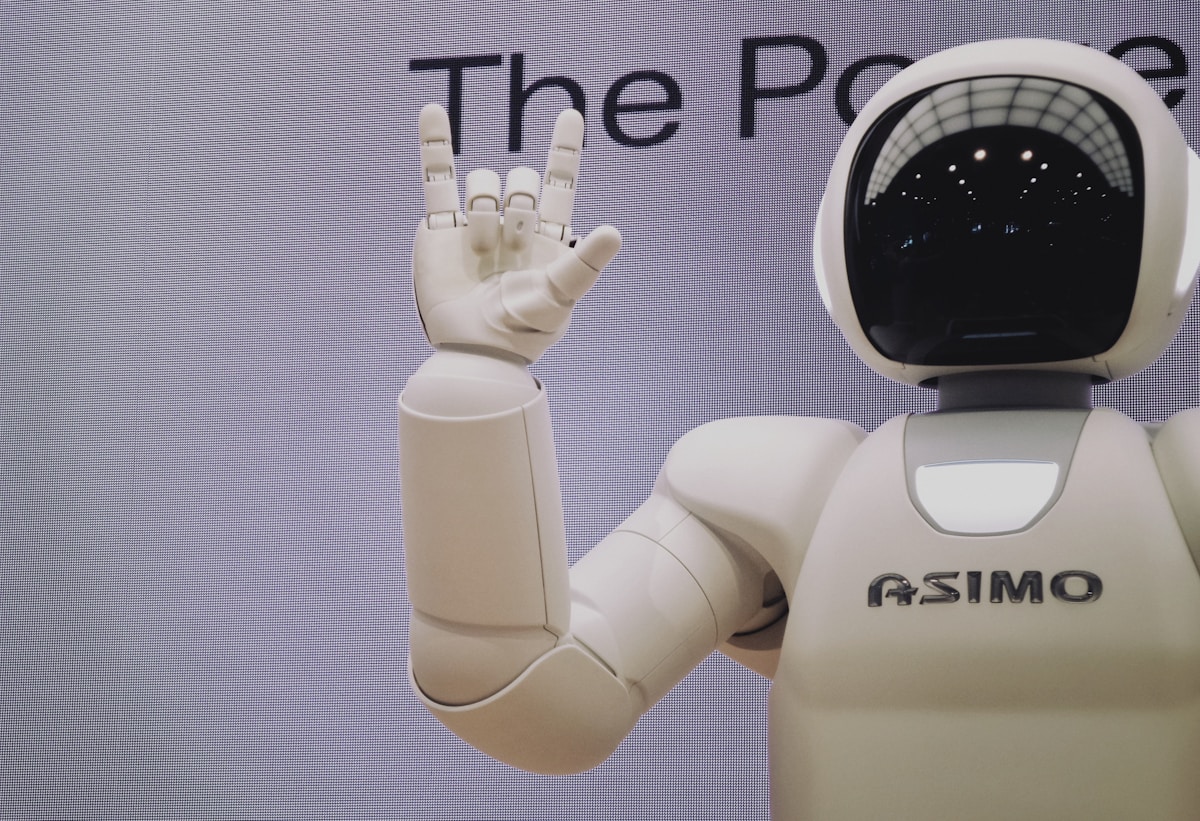
Image credit: Image: Unsplash
Multimodal AI: Challenges and Solutions in the Next Research Frontier
Multimodal Artificial Intelligence (AI), which integrates and processes diverse data modalities such as text, image, audio, and video, is rapidly becoming a central pillar of AI research. As of January 2026, systems like OpenAI's GPT-4V and Google's Gemini have already demonstrated impressive capabilities, yet the journey towards truly robust and comprehensive multimodal AI is fraught with complex challenges demanding innovative solutions.
Fundamental Challenges in Multimodal Research
1. Heterogeneous Data Fusion and Representation
The primary challenge lies in effectively fusing information from disparate modalities. Each modality possesses distinct structures and semantics, making the creation of coherent joint representations an arduous task. How can we ensure a model understands the relationship between the word "apple" and an image of an apple, or the sound of laughter and the visual context of a joke? The disparity in data granularity and dimensionality necessitates sophisticated neural network architectures and robust feature alignment techniques.
2. Hallucinations and Semantic Coherence
Multimodal models, especially generative ones, are still prone to "hallucinations," producing outputs that are superficially plausible but semantically inconsistent or factually incorrect. For instance, a model might confidently describe non-existent elements in an image or generate a video that violates physical laws. Maintaining semantic and factual coherence across all modalities is crucial for the reliability and applicability of these systems.
3. Interpretability and Explainability
As multimodal models grow in complexity, their interpretability diminishes. Understanding how and why a model arrived at a particular conclusion, especially in critical scenarios like medical diagnosis or autonomous driving, is vital. This lack of transparency hinders debugging, auditing, and building trust in these systems.
Solutions and Future Directions
1. Advanced Fusion Architectures
Research is focusing on more sophisticated fusion architectures. Techniques like late fusion, early fusion, and, most notably, intermediate fusion with cross-attention mechanisms are gaining prominence. Models such as DeepMind's Perceiver IO demonstrate the effectiveness of unified architectures that can process diverse modalities with a single attention mechanism, simplifying representation. Research into semantic grounding, linking symbolic representations to sensory perceptions, is also promising.
2. Reinforcement Learning and Human Feedback
To combat hallucinations and enhance coherence, Reinforcement Learning from Human Feedback (RLHF) and alignment techniques with human values are being adapted for the multimodal context. This enables models to learn to generate more accurate and contextually appropriate outputs, reducing the likelihood of semantic errors. The curation of large, high-quality multimodal datasets, such as LAION-5B, remains fundamental.
3. XAI Methods and Multimodal Evaluation
The field of Explainable AI (XAI) is developing specific methods for multimodal models, such as saliency map visualizations that highlight image regions or audio segments that most influenced a decision. Novel evaluation metrics that consider cross-modal coherence and consistency are essential for measuring progress and identifying failures. Research into models that can justify their decisions in natural language is also an active area.
Conclusion
Multimodal AI represents a crucial step towards creating more intelligent and versatile systems capable of interacting with the world more naturally and comprehensively. While the challenges of fusion, coherence, and interpretability are significant, emerging solutions in model architectures, alignment techniques, and XAI methods are paving the way for a new generation of AI that promises to transform countless industries, from healthcare to robotics and content creation.
AI Pulse Editorial
Editorial team specialized in artificial intelligence and technology. AI Pulse is a publication dedicated to covering the latest news, trends, and analysis from the world of AI.


Comments (0)
Log in to comment
Log in to commentNo comments yet. Be the first to share your thoughts!