Multimodal AI: The Next Frontier of Perception in Industry

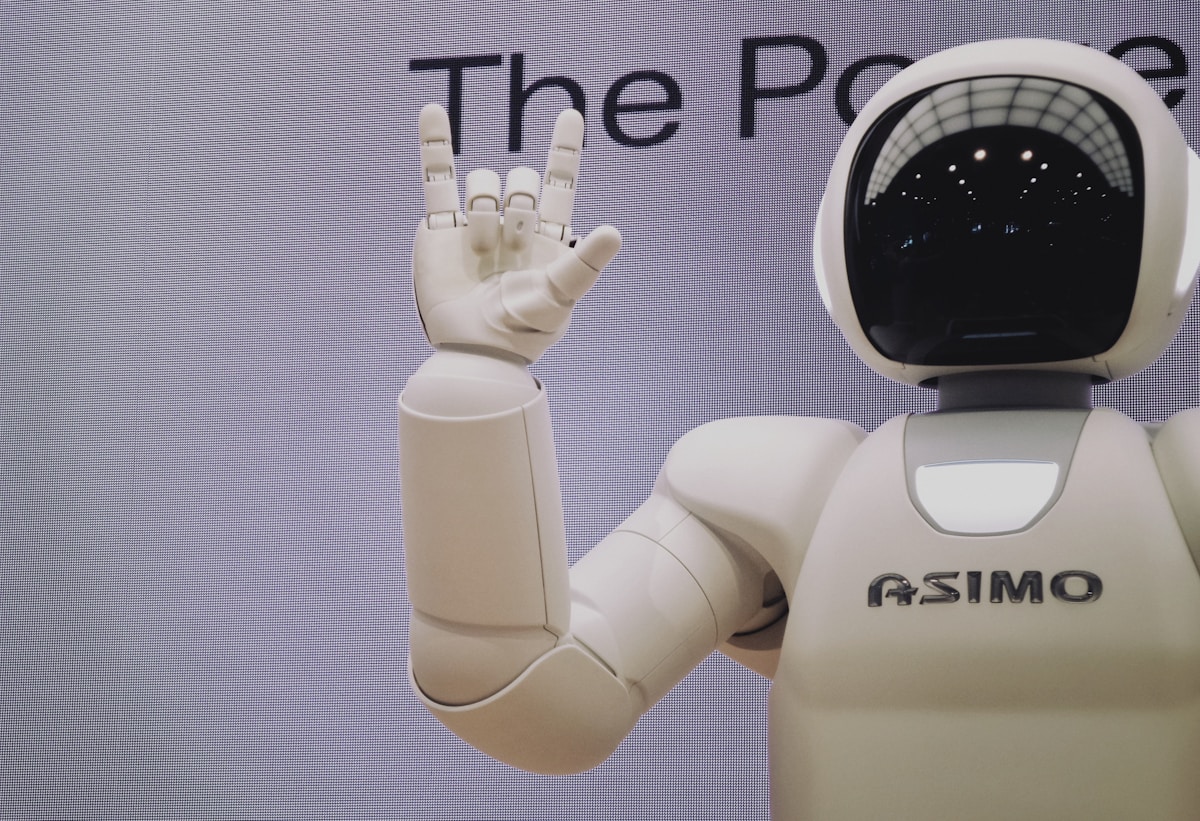
Image credit: Image: Unsplash
Multimodal AI: The Next Frontier of Perception in Industry
Introduction: Converging Digital Senses
As of January 2026, multimodal artificial intelligence stands as one of the most promising pillars of AI research, ushering in a new era of systems capable of comprehending the world more holistically. Unlike unimodal models, which specialize in a single data form (e.g., computer vision for images, NLP for text), multimodal AI integrates and interprets information from multiple sources simultaneously, such as text, image, audio, and video. This data fusion capability enables richer, more robust contextual understanding, essential for complex industrial applications.
Advancements and Industrial Applications
Progress in architectures like Transformers and the fusion of embeddings from different modalities has been crucial. Companies such as Google DeepMind and OpenAI have led the research, with models like Gemini and GPT-4V demonstrating impressive intermodal reasoning capabilities. In industry, these innovations translate into transformative applications:
- Advanced Manufacturing: Quality control systems that simultaneously analyze product images, acoustic sensor data from machinery, and production logs to identify anomalies with greater precision.
- Healthcare: AI-assisted diagnosis combining medical images (X-rays, MRIs), textual patient histories, and audio from consultations to offer more comprehensive insights.
- Retail and Customer Experience: Virtual assistants that understand customer intent through text, voice, and even facial expressions via video, providing more empathetic and effective interactions.
Research Challenges and Opportunities
While the potential is vast, multimodal AI research faces significant challenges. Modality alignment – how to meaningfully correlate disparate information – and real-time heterogeneous data fusion remain active research areas. The need for massive, annotated multimodal datasets is a bottleneck, although initiatives like LAION-5B (for text-image) are mitigating this issue. Furthermore, interpretability and bias mitigation in complex multimodal systems are crucial for their widespread adoption.
Future Outlook and Practical Implications
For businesses, adopting multimodal AI is not just about optimization but about redefining processes and creating new products. The ability to build models that reason about the world more human-like – seeing, hearing, and reading – opens doors for automating complex cognitive tasks. Investing in teams with expertise across various data modalities and exploring Machine Learning Operations (MLOps) platforms that support multimodal pipelines are essential practical steps. Collaborating with research institutions and leveraging pre-trained foundation models are key strategies to capitalize on this rapidly evolving technology.
AI Pulse Editorial
Editorial team specialized in artificial intelligence and technology. AI Pulse is a publication dedicated to covering the latest news, trends, and analysis from the world of AI.


Comments (0)
Log in to comment
Log in to commentNo comments yet. Be the first to share your thoughts!