Multimodal AI: Unifying Perception and Cognition in Advanced Systems

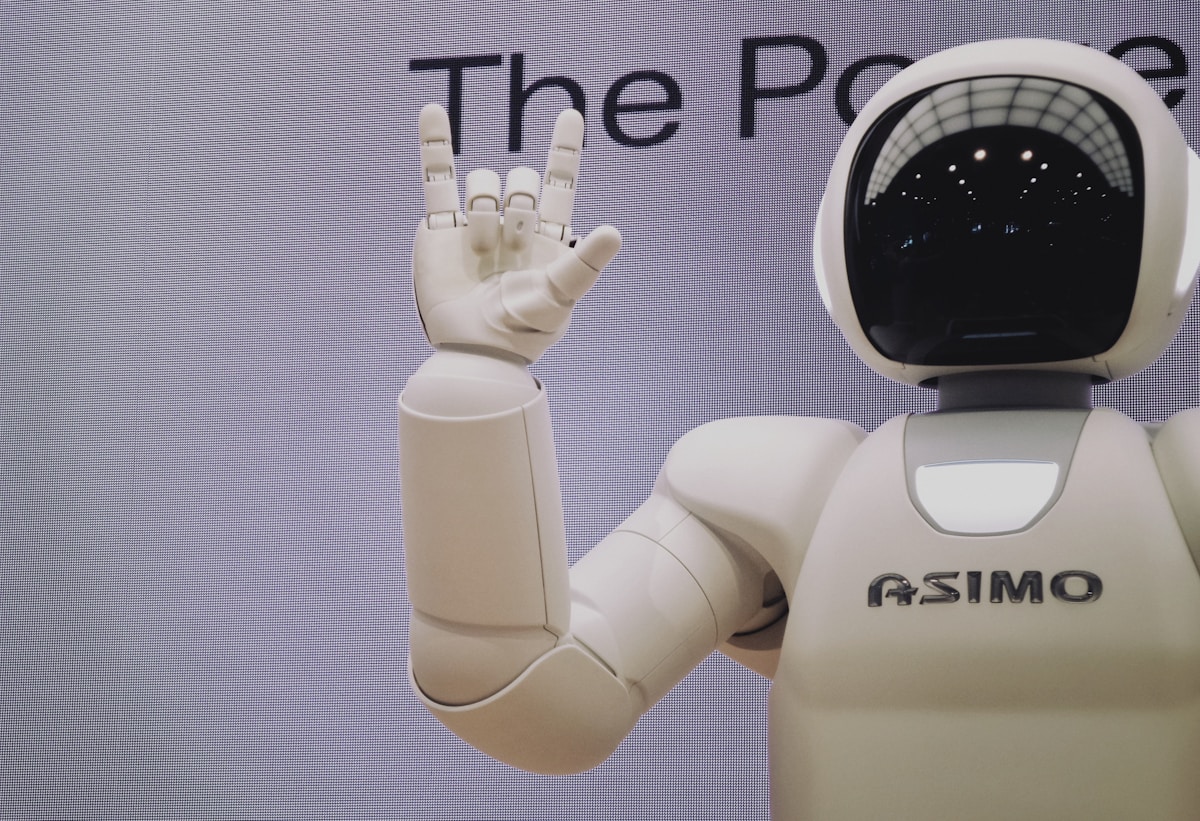
Image credit: Image: Unsplash
Multimodal AI: Unifying Perception and Cognition in Advanced Systems
Artificial intelligence (AI) has evolved exponentially, but a true understanding of the world requires more than analyzing a single data modality. Research in multimodal AI systems aims to replicate the human ability to integrate information from various sources – such as vision, language, audio, and touch – to form a coherent, contextualized perception. As of January 2026, this area is no longer a distant promise but an active frontier of innovation, driving the next generation of intelligent applications.
The Essence of Multimodality in AI
Multimodal systems process and correlate data from different sensory modalities, enabling a more holistic and robust understanding. For instance, a model can analyze an image (vision), its associated textual description (language), and ambient sound (audio) to infer the context of a scene with far greater accuracy than a unimodal system. This integration resolves ambiguities and enriches the model's internal representation, making it more resilient to noise and incomplete information in any individual modality.
Recent Advances and Key Architectures
The past few years have witnessed remarkable progress, driven by transformer architectures and foundation models. Companies like Google (with models such as Gemini) and OpenAI (with GPT-4V) are leading the way, demonstrating impressive capabilities in tasks like image captioning, visual question answering (VQA), and even text-to-video generation. Current research focuses on:
- Representation Alignment: Developing methods to map representations from different modalities into a common latent space.
- Information Fusion: Techniques for effectively combining aligned information, whether through early fusion, late fusion, or hybrid approaches.
- Multimodal Self-supervised Learning: Utilizing the natural correlation between modalities to pre-train models on vast amounts of unlabeled data, such as videos with audio and captions.
Challenges and Next Steps in Research
While promising, multimodal systems face significant challenges. The collection and annotation of large-scale multimodal datasets are complex and costly. Furthermore, the robustness and interpretability of these models remain areas of intensive research. Ensuring that the model does not over-rely on a single modality or propagate biases present in one modality to another is crucial. The research community is exploring techniques such as causal inference and adversarial training to mitigate these issues.
Practical Implications and Future Outlook
The applications of multimodal AI are vast and transformative. In healthcare, it can aid diagnosis by combining medical images, patient histories, and speech data. In robotics, it enables robots to perceive and interact with their environment more naturally and intelligently. In entertainment, it drives dynamic content creation and immersive experiences. As research progresses, we can expect AI systems that not only understand but also interact with the world in a way that increasingly mirrors human cognition, opening doors to true artificial general intelligence (AGI).
Practical Takeaways:
- Prioritize Multimodal Data: Developers should seek datasets that integrate diverse modalities to train more robust models.
- Explore Fusion Architectures: Experiment with different fusion strategies (early, late, hybrid) to optimize performance for specific tasks.
- Focus on Robustness and Interpretability: Invest in techniques to make multimodal models more reliable and understandable, especially in critical applications.
AI Pulse Editorial
Editorial team specialized in artificial intelligence and technology. AI Pulse is a publication dedicated to covering the latest news, trends, and analysis from the world of AI.


Comments (0)
Log in to comment
Log in to commentNo comments yet. Be the first to share your thoughts!