Multimodal AI: Unifying Senses to Transcend Perceptual Limits
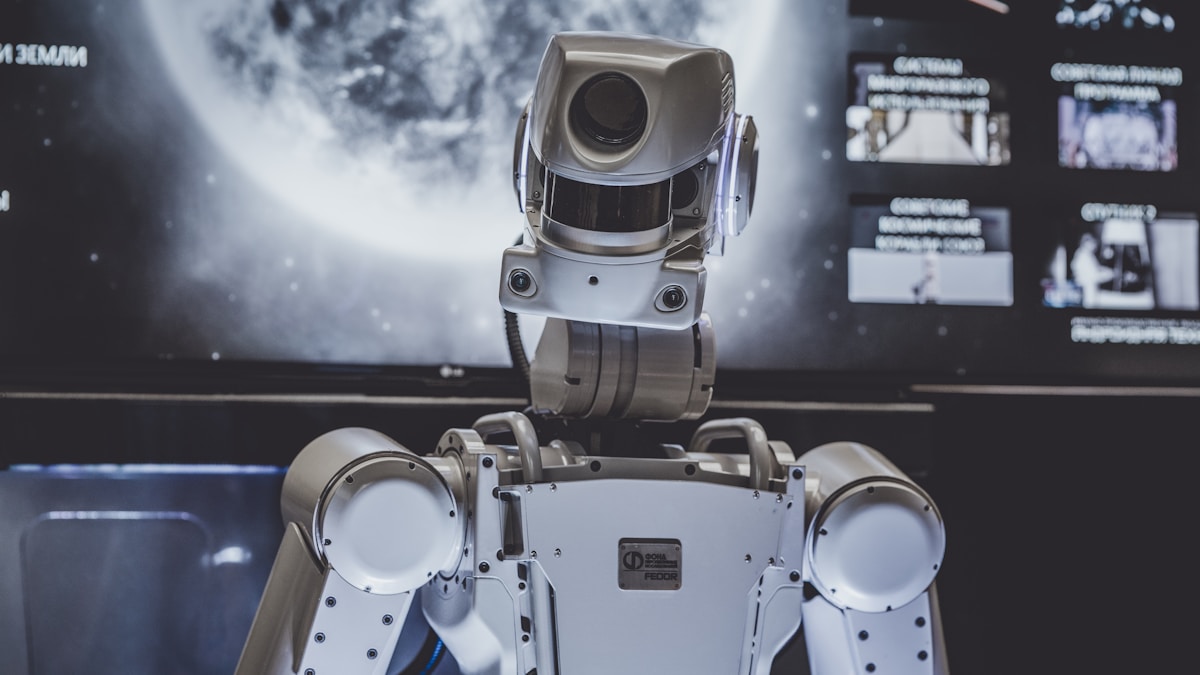
Image credit: Image: Unsplash
Multimodal AI: Unifying Senses to Transcend Perceptual Limits
Since the dawn of artificial intelligence, the ability to process and comprehend the world has been fragmented, with systems specializing in a single modality, such as computer vision or natural language processing. However, human cognition is inherently multimodal, continuously integrating visual, auditory, tactile, and linguistic information to form a coherent and rich understanding of the environment. Multimodal AI research aims to replicate this capability, developing systems that can learn from and interact through multiple data modalities simultaneously. As of January 2026, this field is not merely a research frontier but a reality reshaping human-machine interaction and the autonomy of intelligent systems.
Foundations and Key Architectures
Multimodal AI is predicated on the fusion of information from different data types. This can be broadly categorized into three main levels: early fusion (input data fusion), intermediate fusion (feature fusion), and late fusion (decision fusion). Modern architectures, particularly Transformer-based models, have been instrumental in the advancement of multimodal AI. Models like CLIP (OpenAI) and Florence (Microsoft) have demonstrated the efficacy of learning joint representations of images and text, enabling tasks such as text-to-image retrieval or caption generation. More recently, models such as Gemini (Google DeepMind) and GPT-4V (OpenAI) exemplify the ability to reason over images and text cohesively, paving the way for more natural and complex interactions. Current research focuses on architectures that can handle the asynchronicity and varying granularities of multimodal data, utilizing cross-attention mechanisms and self-attention modules to effectively integrate information.
Computational and Data Challenges
Despite significant progress, multimodal AI research faces considerable challenges. Data heterogeneity is a primary hurdle; combining modalities such as video, audio, text, and sensory data (e.g., from robotic sensors) requires robust methods for aligning and normalizing representations. The sheer scale of multimodal data is also a limiting factor. Training multimodal models necessitates vast, annotated datasets, which are expensive and difficult to collect and curate. Privacy concerns and inherent biases within multimodal data are growing ethical considerations, demanding approaches to ensure fairness and robustness in systems. Furthermore, the interpretability of multimodal models remains a challenge, as the complexity of interactions between modalities makes it difficult to trace the model's decision-making process.
Applications and Future Prospects
The applications of multimodal AI are vast and transformative. In healthcare, it can aid diagnosis by combining medical images, patient data, and clinical notes. In robotics, it enables robots to perceive their environment more comprehensively, integrating vision, touch, and hearing for safer and more effective navigation and manipulation. In human-computer interaction, multimodal virtual assistants can understand communication nuances beyond text or speech, interpreting facial expressions and gestures. Future research will likely focus on: (1) Continuous and Adaptive Learning: Enabling multimodal models to learn continuously from new experiences and adapt to novel domains. (2) Higher-Level Reasoning: Developing the capability to perform complex inferences and abstract reasoning across multiple modalities. (3) Embodied AI: Integrating multimodal AI into physical agents to allow for richer, more contextualized interaction with the real world.
Conclusion
Multimodal AI stands at the core of the next generation of intelligent systems, promising a world understanding more aligned with human perception. By unifying digital senses, we are building systems that not only see and hear but comprehend the context and complex relationships between different forms of information. While the challenges are considerable, the pace of innovation suggests we are on the cusp of an era where multimodal AI will fundamentally transform how we interact with technology and the world around us.
AI Pulse Editorial
Editorial team specialized in artificial intelligence and technology. AI Pulse is a publication dedicated to covering the latest news, trends, and analysis from the world of AI.


Comments (0)
Log in to comment
Log in to commentNo comments yet. Be the first to share your thoughts!