Neural Network Architecture Innovations: Best Practices
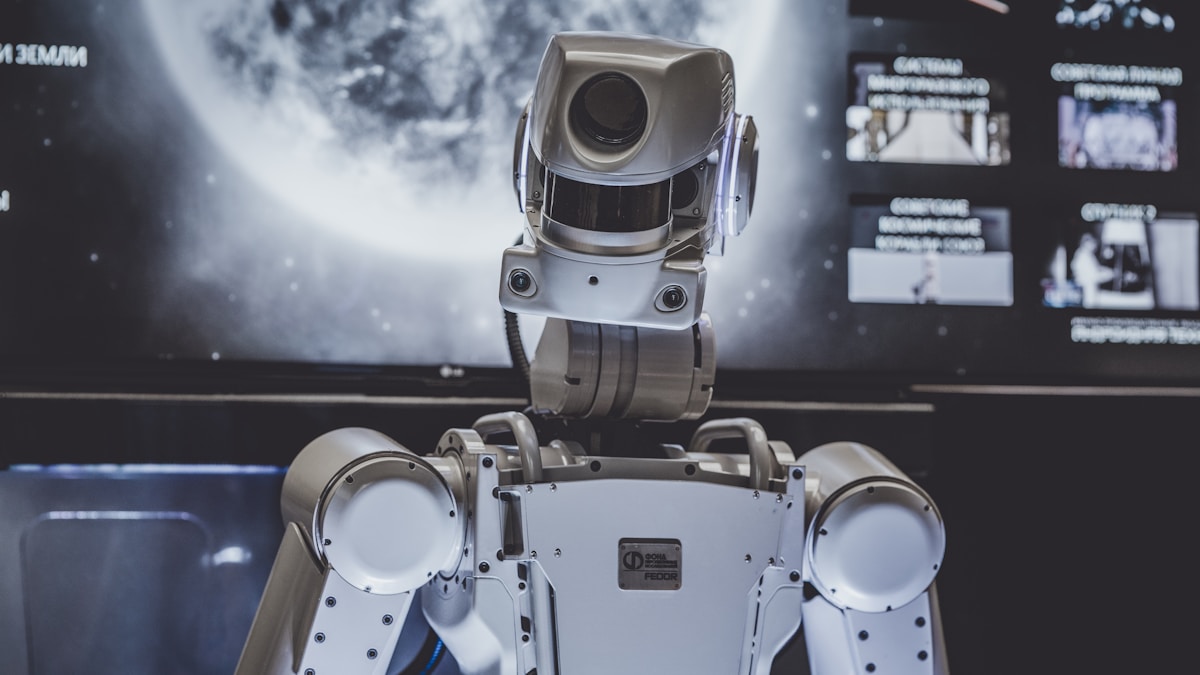
Image credit: Image: Unsplash
Neural Network Architecture Innovations: Best Practices for Modern Design
The artificial intelligence landscape in 2026 is defined by a proliferation of increasingly sophisticated neural network architectures. The pursuit of more efficient, robust, and generalizable models has driven innovations that transcend traditional paradigms. For researchers and engineers, understanding and applying best practices in architectural design is crucial for success in domains ranging from natural language processing (NLP) to computer vision and robotics.
The Rise of Foundation and Adaptive Models
The era of foundation models, popularized by architectures like OpenAI's GPT-4 and Google's Gemini, continues to dominate the scene. Innovation here lies not just in size but in adaptability. Techniques such as Parameter-Efficient Fine-Tuning (PEFT), including LoRA (Low-Rank Adaptation) and QLoRA, have become essential. They enable the customization of colossal models with significantly reduced computational resources, democratizing access to advanced AI capabilities. The best practice is to always consider low-cost adaptation strategies for downstream tasks, optimizing resource utilization and carbon footprint.
Hybrid and Neuro-Symbolic Architectures
A promising emerging trend is the integration of neural networks with symbolic or logical systems. Neuro-symbolic architectures, as proposed by researchers at IBM and Stanford University, aim to combine the pattern recognition capabilities of neural networks with the logical reasoning and explainability of symbolic systems. This is particularly relevant for tasks requiring complex inference, planning, and adherence to rules, such as AI systems for medicine or law. Adopting explicit reasoning modules or incorporating knowledge graphs can enhance model robustness and interpretability, a growing requirement in critical applications.
Architectural Efficiency and Sustainability
With the increasing size of models, computational efficiency and sustainability have become priorities. Architectures like Mixture-of-Experts (MoE), exemplified in models such as Mistral AI's Mixtral 8x7B, allow only a portion of the network to be activated for each input, reducing the computational cost per inference. Furthermore, the quest for hardware-aware architectures, optimized for GPUs, TPUs, or neuromorphic chips, is a fundamental practice. Model profiling and optimization tools, such as ONNX Runtime and NVIDIA's TensorRT, are indispensable for ensuring that architectural innovations translate into practical performance.
Conclusion: The Path to Smarter, More Responsible Models
Neural network architecture innovations in 2026 reflect a maturation of the field, with a focus on adaptability, interpretability, and efficiency. Adopting PEFT, exploring neuro-symbolic approaches, and prioritizing computational efficiency are the best practices that will guide the next generation of AI systems. Architectural design is no longer just about raw performance but about creating models that are intelligent, responsible, and sustainable.
AI Pulse Editorial
Editorial team specialized in artificial intelligence and technology. AI Pulse is a publication dedicated to covering the latest news, trends, and analysis from the world of AI.



Comments (0)
Log in to comment
Log in to commentNo comments yet. Be the first to share your thoughts!