RL in 2026: Predictions and the Future of Reinforcement Learning

Image credit: Image: Unsplash
RL in 2026: Predictions and the Future of Reinforcement Learning
Reinforcement Learning (RL) has been a dynamic field within artificial intelligence, driving innovations from mastering complex games to optimizing infrastructure. As we move into 2026, the pace of RL research and development shows no signs of slowing. This article explores the emerging trends and predictions for the future of RL, highlighting how this discipline will shape the next generation of intelligent systems.
Generalized Reinforcement Learning and Robotics
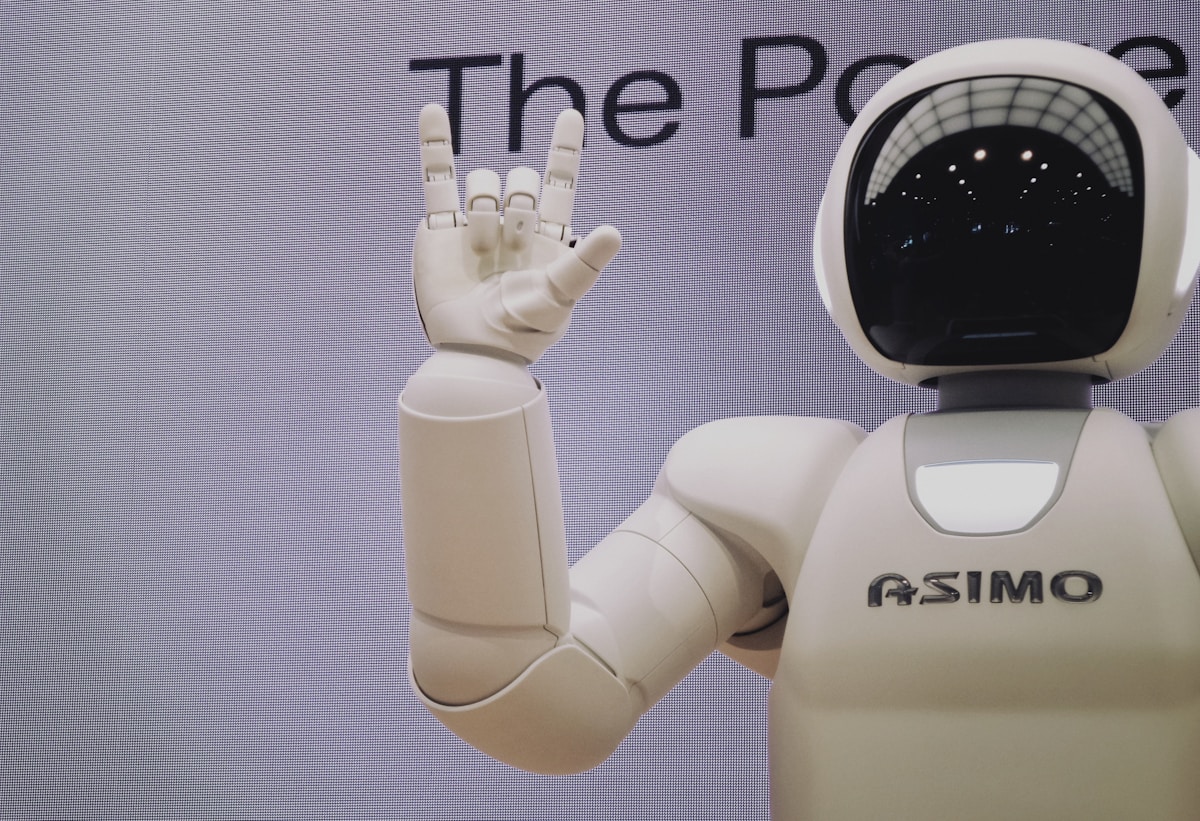
One of the most impactful predictions for 2026 is the proliferation of RL agents capable of generalizing tasks across diverse environments with greater efficiency. The focus has shifted from learning single tasks to developing robust policies that can be quickly transferred or adapted to new scenarios. Companies like Google DeepMind and Boston Dynamics are heavily investing in RL for robotics, aiming for robots that can operate in unstructured, dynamic environments, from warehouses to space exploration. We expect to see significant advancements in meta-RL and transfer learning to enable robots to learn new skills with less data and in less time, overcoming current sim-to-real transfer limitations.
RL for Complex System Optimization
Beyond robotics, RL is becoming an indispensable tool for optimizing complex systems in sectors such as finance, logistics, and energy. By 2026, we predict that RL algorithms will be routinely employed to manage global supply chains, optimize smart energy grids, and personalize investment strategies in real-time. RL's ability to make sequential decisions under uncertainty makes it ideally suited for these domains. For instance, traffic optimization in smart cities or resource management in data centers (as demonstrated by Google) will become more sophisticated with the integration of multi-agent RL and hierarchical RL, allowing multiple agents to collaborate or operate at different levels of abstraction to achieve global objectives.
Challenges and the Path to Trustworthy RL
Despite its potential, RL faces persistent challenges that the research community is actively addressing. The issue of interpretability and safety of RL agents is crucial, especially in high-stakes applications. In 2026, there will be an increasing focus on safe RL, where algorithms are designed to avoid dangerous or undesirable behaviors, even during the exploration phase. Furthermore, data efficiency remains a bottleneck; the development of techniques like model-based RL and offline RL (which learns from pre-existing data without direct environment interaction) will be key to reducing the need for millions of interactions, making RL more accessible and practical for real-world scenarios with limited data.
Conclusion: An Autonomous and Adaptive Future
In summary, 2026 promises to be a year of consolidation and expansion for Reinforcement Learning. We will see a transition from laboratory demonstrations to robust, scalable implementations across various industries. The ability to create agents that autonomously learn, adapt, and optimize will be the cornerstone of the next phase of artificial intelligence, driving innovation and efficiency on an unprecedented scale. Companies and researchers who invest in overcoming the challenges of generalization, data efficiency, and safety will be at the forefront of this revolution. Practical takeaways include exploring open-source RL libraries like Ray RLlib or Stable Baselines3 for experimentation, and considering RL approaches for complex optimization problems currently relying on heuristics or traditional programming.
AI Pulse Editorial
Editorial team specialized in artificial intelligence and technology. AI Pulse is a publication dedicated to covering the latest news, trends, and analysis from the world of AI.


Comments (0)
Log in to comment
Log in to commentNo comments yet. Be the first to share your thoughts!